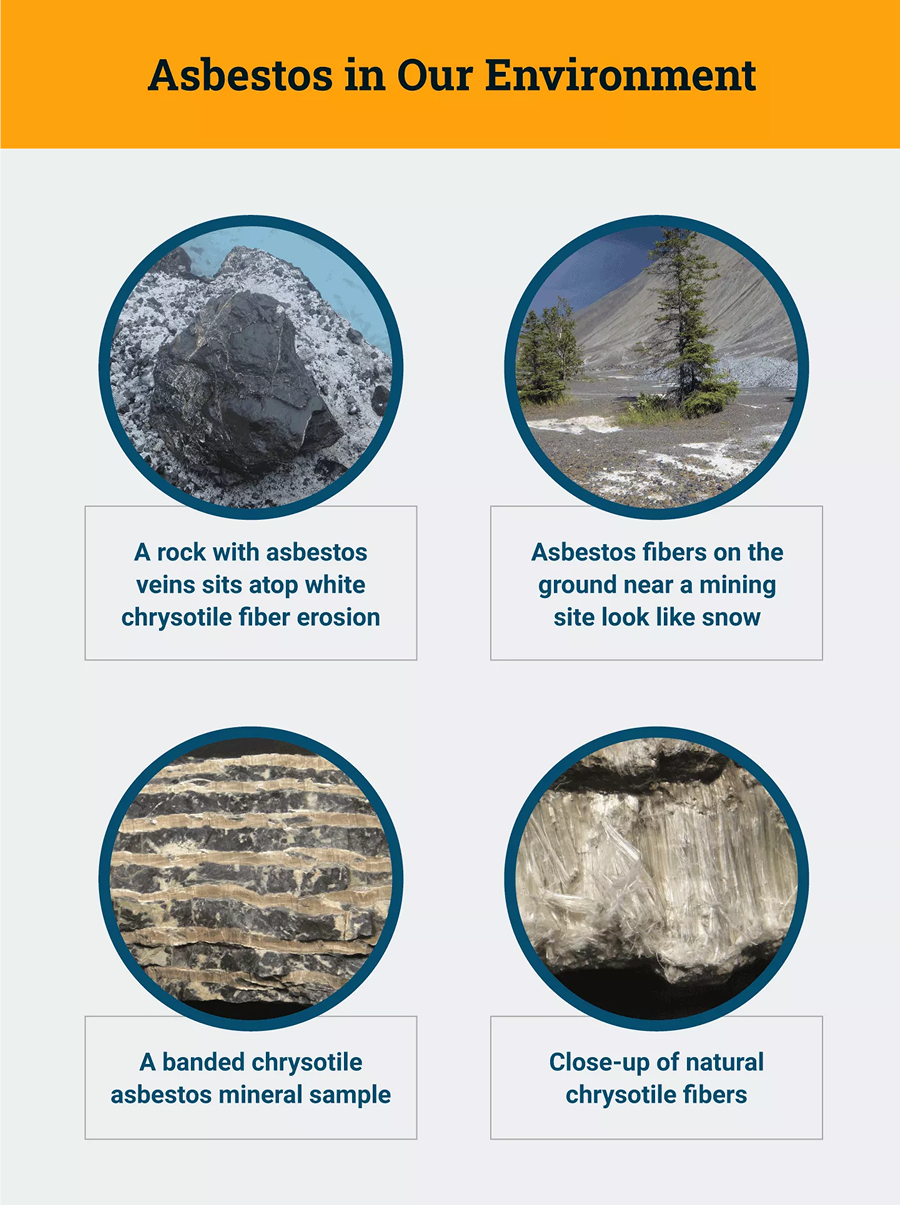
Asbestos fibers released through human activities and natural disasters can contaminate the air, water and soil. The environmental effects of asbestos can contribute to human health effects like mesothelioma. Remediation efforts aim to protect people from exposure to environmental asbestos exposure.
Learn more about mesothelioma, asbestos and the steps you can take to fight this disease.
The environmental effects of asbestos can harm humans, wildlife and possibly plant life. Activities like mining, construction and even natural disasters can release asbestos fibers into the air, water and soil. Even though asbestos is a mineral that forms naturally in mountainous areas, it can cause problems when it’s released into the environment.
When people breathe in asbestos fibers, they can get trapped in and around their lungs, leading to serious human health effects like mesothelioma. Asbestos fibers can also harm wildlife and pets. Scientists have found evidence of mesothelioma in animals exposed to asbestos including dogs, cats, fish and cows.
Studies on how asbestos affects plants have shown mixed results. Some plants seem to be more resistant to asbestos than others. Heavy metals often contaminate the soil alongside asbestos, making it difficult for scientists to determine the effects of asbestos alone. Researchers are investigating ways to use plants in soil remediation efforts. This phytoremediation has the potential to stabilize asbestos in soil to limit human exposure.
Air Pollution & Asbestos Exposure
Asbestos air pollution can cause serious human health effects. Activities like asbestos mining and construction on land with asbestos deposits can release these fibers into the air. Once airborne, the fibers can travel long distances, affecting the environment and the people and animals that live there.
Natural disasters like hurricanes and tornadoes can damage buildings that contain asbestos, also causing air pollution. When asbestos becomes damaged, fibers are released into the air. Similarly, man-made disasters like fires and demolitions can release asbestos fibers. These airborne fibers pose a serious threat to the environment.
Wind can carry them to different areas, contaminating the air, water and soil. When people and wildlife inhale these fibers, they can become trapped in the lungs, leading to serious health problems.
Soil and Water Contamination
Soil and water contamination with asbestos happens when tiny asbestos fibers spread into the ground and water. Natural sources of asbestos, like ultramafic rocks containing asbestos, can break down over time. Wind and rain can carry these fibers into the soil and water, contaminating them.
Construction and other human activities can also disturb natural asbestos. When people dig or move soil with asbestos, the fibers can break away and spread. Rain can then wash these fibers into rivers, lakes and groundwater supplies. This makes the water unsafe to drink.
Asbestos-containing materials can also contaminate the environment. Old asbestos waste piles near former mines and factories can release fibers. Asbestos in landfills can also contaminate the soil and water. Some Superfund sites have a history of extensive asbestos contamination. A Superfund site is a polluted location that the government has identified for remediation efforts because it poses a risk to human health and the environment.
500+ SPECIALISTS AVAILABLE
Get to the Right Doctor, Faster
Connect with top-rated doctors specializing in mesothelioma treatment, who will personalize treatment options based on your diagnosis.
Who Is at Risk of Environmental Asbestos Exposure?
People who live near asbestos deposits and mines face the greatest risk of environmental asbestos exposure. Miners and construction workers who disturb asbestos deposits can breathe in the fibers. Natural disasters like wildfires and floods can also disturb asbestos and put people at risk.
Children and pets can be at risk if they play in areas with asbestos-contaminated soil. Children face heightened risks if exposed because their lungs are still developing. Their young age offers time for asbestos to damage their health. Asbestos-related health issues take approximately 20-60 years to develop.
Asbestos is found in low levels in air, water or soil nationwide. This means that everyone is exposed during their lifetime. Most people remain healthy with limited exposure.
Survivor Experience
It is important to know where asbestos is in the environment so that future urban development does not encroach on it, and we can prevent cancer in the future.
Dr. Michele Carbone, director of thoracic oncology at the University of Hawaii Cancer Center
Verified Asbestos.com Survivor
Asbestos in the United States
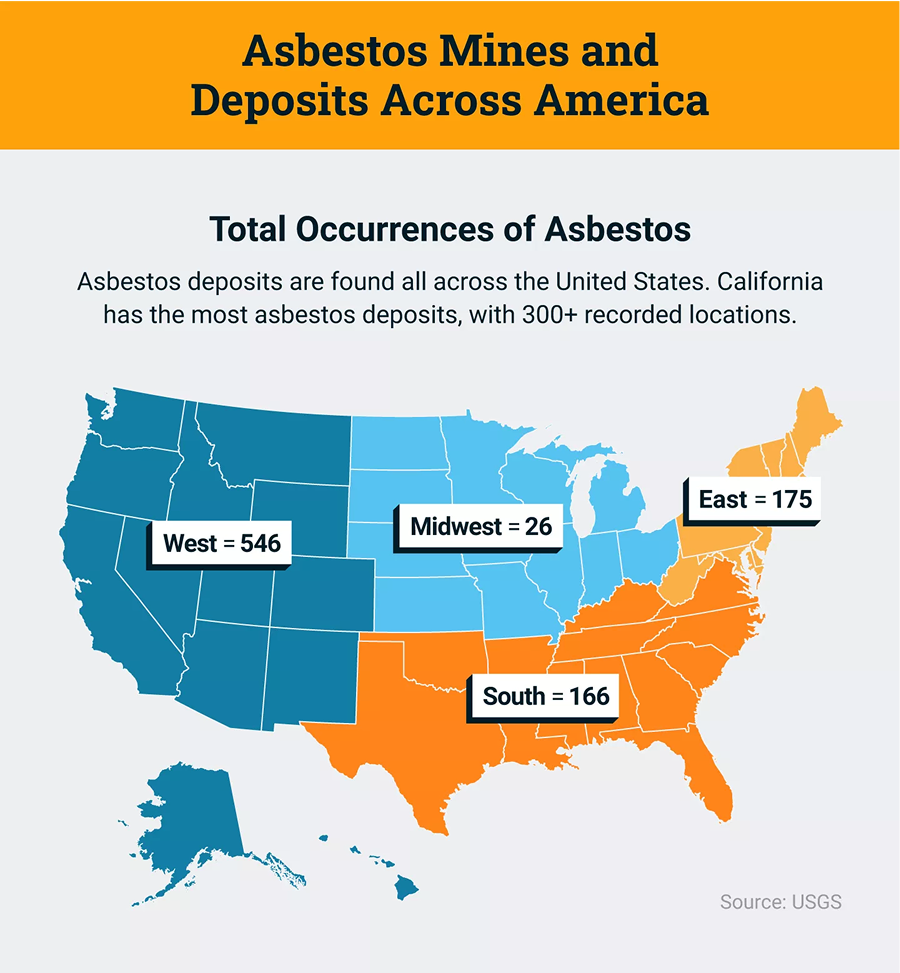
Naturally occurring asbestos deposits are in many areas of the United States. Mountainous regions have the most deposits. The Western U.S. was home to mining operations in California, Montana, Nevada, Wyoming, Idaho and Washington. The U.S. Geological Survey has created an interactive map you can use to see if there are natural asbestos deposits near you.
The U.S. stopped mining asbestos in 2002. Even though the U.S. no longer mines asbestos, it still imports it. In 2023, the U.S. consumed 150 metric tons of asbestos, according to the U.S. Geological Survey.
The U.S. Environmental Protection Agency announced a ban on chrysotile asbestos in 2022. The ban includes timelines for phasing out asbestos in different industries. For example, the chlor-alkali industry has up to 12 years to find alternatives to asbestos.
Case Study: Las Vegas, Nevada
Environmental exposure to asbestos in the Clark and Nye counties in southern Nevada is largely the result of development. Researchers from the University of Hawaii Cancer Center found high rates of mesothelioma among women and young people in the area in 2015.
The mix of construction growth, off-road recreational vehicle usage, dust storms and a dry climate allowed asbestos to become airborne and blow into the Las Vegas area. This area is home to 1.9 million people.
Many residents live close to or downwind from natural asbestos sources. A 2019 study showed ongoing development and population growth increase the risk of exposure.
Case Study: Libby, Montana
Mining in Libby, Montana, contaminated the land, water and air with asbestos. Environmental contamination spread at least 20 miles away into the town of Troy. Scientists found asbestos in the bark of trees within the forests surrounding the Libby mine.
A 2021 study reports around 700 people have died from asbestos-related diseases in Libby. About 2,400 additional residents have received a related diagnosis.
The mine closed in 1990, and cleanup didn’t begin until 1999. The EPA removed more than a million cubic yards of hazardous materials. This made it the largest asbestos cleanup in U.S. history.
Exclusive Content
Karen Selby: The Widespread Use and Hidden Dangers of Asbestos
Asbestos was so widely used because it’s an amazing product.
It’s a God made mineral. It’s it’s a rock, and it has great attributes, it’s a fire retardant, it’s an insulator, and it’s free, it’s a part of the earth. And that’s why it was used in so many products because it was just an amazing product. It was put in so many different things, anything that could potentially catch fire, or anything that, needed to stay insulated or warm, whether it be ceiling tiles or flooring or walls or anything in our homes or anything in the industry.
For example, machines that blow or have a a motor in it are always in insulated with something. So in case it sparks or catches fire, it’s gonna be insulated. Well, back in the day, it was insulated with asbestos products. So if potentially catch fire, it would, you know, put it out because it’s great fire retardant.
The unfortunate thing is it can be a health hazard. It causes cancer, and because it’s a fine rock or mineral, when it becomes disturbed, it becomes airborne. When it becomes airborne, it can be ingested or in inhaled. And oftentimes, if you get an accumulation of inhaling something so microscopic, you can’t see it, it can become a future health hazard.
The Long-Term Environmental Impact of Asbestos
Mining, using and dumping asbestos can contaminate the environment for a long time. Wind and rain spread asbestos fibers. These fibers can affect wildlife in addition to humans.
Long-Range Asbestos Effects on the Environment
Animals breathe in asbestos fibers and can get sick.
Humans develop diseases decades after exposure to environmental asbestos.
Plants may experience effects from asbestos in the soil.
Soil and water remain contaminated for a long time because asbestos is durable.
Asbestos contamination from the past still affects the environment today. Old mines and factories leave behind asbestos. This contamination affects the future of land use and puts nearby residents at risk. Remediation efforts try to clean these areas with varying degrees of success.
Ways to Limit Environmental Asbestos Exposure
People can take measures to protect themselves from environmental asbestos exposure. They can learn about asbestos risks in their area. People who live near areas with asbestos in the soil should avoid disturbing it.
Tips to Reduce Environmental Asbestos Exposure Risks
Check the U.S. Geological Survey interactive map for asbestos deposits near you.
Learn about asbestos Superfund sites in your area.
Avoid disturbing soil or dust near old mines or asbestos factories.
Don’t dig or garden in areas known to contain asbestos in the soil.
Clean shoes before entering your home if you live near asbestos deposits.
Hotspots like El Dorado Hills, California, have environmental asbestos exposure risks. You can learn about asbestos exposure risks per state. Hiring licensed abatement professionals to remove asbestos safely can protect your family from exposure.
Common Questions About How Asbestos Affects the Environment
Why is asbestos an environmental issue?
Asbestos is an environmental issue because it can pollute the air, soil and water. Asbestos fibers cause serious health problems in humans and wildlife. Toxic exposure to environmental asbestos causes mesothelioma in humans and animals.
Where is asbestos most commonly found in the environment?
Asbestos in the environment is mostly found near mountainous regions. Natural asbestos deposits and old mining sites present a serious risk of exposure.
Can natural disasters contaminate the environment with asbestos?
Yes, natural disasters like hurricanes and earthquakes can lead to asbestos contamination in the environment. They can damage natural asbestos deposits and destroy buildings with asbestos. This damage releases asbestos fibers into the air.
Can asbestos contamination in the environment be cleaned up?
Yes, remediation efforts can clean up asbestos contamination in the environment. Methods exist to remove asbestos from soil and water. For example, if asbestos is in a top layer of soil, workers carefully dig it up and take it to a designated disposal site. Removing asbestos from water involves filters and special treatments. In the future, the cost of denaturing asbestos with extremely high heat may become more affordable and more widely available.
Recommended Reading
Your web browser is no longer supported by Microsoft. Update your browser for more security, speed and compatibility.
If you are looking for mesothelioma support, please contact our Patient Advocates at (855) 404-4592
Fact Checked
Our fact-checking process begins with a thorough review of all sources to ensure they are high quality. Then we cross-check the facts with original medical or scientific reports published by those sources, or we validate the facts with reputable news organizations, medical and scientific experts and other health experts. Each page includes all sources for full transparency.
Reviewed
Asbestos.com is the nation’s most trusted mesothelioma resource
The Mesothelioma Center at Asbestos.com has provided patients and their loved ones the most updated and reliable information on mesothelioma and asbestos exposure since 2006.
Our team of Patient Advocates includes a medical doctor, a registered nurse, health services administrators, veterans, VA-accredited Claims Agents, an oncology patient navigator and hospice care expert. Their combined expertise means we help any mesothelioma patient or loved one through every step of their cancer journey.
More than 30 contributors, including mesothelioma doctors, survivors, health care professionals and other experts, have peer-reviewed our website and written unique research-driven articles to ensure you get the highest-quality medical and health information.
About The Mesothelioma Center at Asbestos.com
Assisting mesothelioma patients and their loved ones since 2006.
Helps more than 50% of mesothelioma patients diagnosed annually in the U.S.
A+ rating from the Better Business Bureau.
5-star reviewed mesothelioma and support organization.
My family has only the highest compliment for the assistance and support that we received from The Mesothelioma Center. This is a staff of compassionate and knowledgeable individuals who respect what your family is experiencing and who go the extra mile to make an unfortunate diagnosis less stressful. Information and assistance were provided by The Mesothelioma Center at no cost to our family.
Selby, K. (2026, February 9). Environmental Effects of Asbestos. Asbestos.com. Retrieved September 14, 2026, from https://www.asbestos.com/asbestos/environmental-effects/
MLA
Selby, Karen. "Environmental Effects of Asbestos." Asbestos.com, 9 Feb 2026, https://www.asbestos.com/asbestos/environmental-effects/.
Chicago
Selby, Karen. "Environmental Effects of Asbestos." Asbestos.com. Last modified February 9, 2026. https://www.asbestos.com/asbestos/environmental-effects/.
My primary support since being diagnosed with Mesothelioma, over 2 years ago, has been this company. Their monthly nationwide support group has been a tremendous help for me. I have learned about others' treatments and have been able to freely discuss mine, knowing others walk the same walk as I do and fully understand. Karen Selby, the nurse and patient advocate, has helped me so much. I call her and she delivers. She's experienced in Thoracic surgeries, is supportive, kind, knowledgeable, and makes a patient feel very cared for! The whole staff are polite, caring, and will help with Mesothelioma victims' many needs. I feel very blessed to have this Organization by my side as I live with this cancer.
I found out about The Mesothelioma Center while researching Peritoneal Mesothelioma days after being diagnosed with malignant cancer. While a lot of the 'Mesothelioma' websites are actually law firms just trying to get your business, theirs is a user-friendly, comprehensive website set up to aid patients, their loved ones, and/or caregivers with all things related to a cancer diagnosis from asbestos exposure. I was soon put in touch with one of their doctors, Snehal Smart, M.D., who immediately sent me a packet of general information, a book on surviving Mesothelioma, and offered me assistance in finding doctors, reputable law firms, financial help, support groups, and so much more! The Mesothelioma Center's website is, in my opinion, the best resource for anyone suffering from cancer due to asbestos. Dr. Smart is amazing! She is very knowledgeable and helpful, but she is also a very kind, caring doctor who appears to go the distance whether she is researching a pertinent topic, making suggestions, providing contacts, or just being a good listener on the other end of the phone. In addition, Dr. Smart referred me to a law firm who is now fighting to get me compensation for the negligence of those defendants whose products exposed me to asbestos and caused my subsequent cancer. Thank you, TMC and Dr. Smart, for helping me determine the best treatment plan for my cancer and being part of my miracle. I am currently cancer-free and back to being a mom to my precious daughter. The Mesothelioma Center, their website, and their staff rock!!
I just want to take this time to thank Mesothelioma Center for all the information you provide. The survival stories are inspiring and give hope where hope is needed! Thanks to you, I have met many others on the site and continue to converse with them. Keep up the good work. I am always looking forward to your posts! Thank you, Richard Delisle.
My brother was recently diagnosed with mesothelioma. I began researching it online. The information I received from The Mesothelioma Center is all-inclusive. No need to look anywhere else! The first phone call was with Karen, and she answered all my questions with ease. She also had a calming effect by presenting all the options available for my brother and his family. Thank you!
My father was recently diagnosed with mesothelioma. We, as a family, were devastated. We were uncertain where to even start, so we reached out to The Mesothelioma Center. They were absolutely amazing. They provided physicians in our area who specialize in this type of cancer because it is so rare. They also set us up with a firm who specializes in getting funds that are set aside to help with our medical bills. I’m so glad we made the phone call. They were very knowledgeable, supportive, sincere, and true patient advocates.
Registered Nurse and Board Certified Patient Advocate
Karen Selby is a registered nurse and Board Certified Patient Advocate at The Mesothelioma Center with more than 30 years of experience in oncology and thoracic surgery. She worked as an operating room nurse in thoracic surgery at the University of Maryland for 6 years, assisting with surgeries such as lung transplants, pneumonectomies and pleurectomies. She later served as regional director of the tissue procurement program at the University of Florida. Karen joined The Mesothelioma Center in 2009, providing patients with personalized support and resources.
Fact-checked and verified content:
Our fact-checking process begins with a thorough review of all sources to ensure they are high quality. Then we cross-check the facts with original medical or scientific reports published by those sources, or we validate the facts with reputable news organizations, medical and scientific experts and other health experts. Each page includes all sources for full transparency.
Please read our editorial guidelines to learn more about our content creation and review process.