Mesothelioma metastasis means cancer that starts in the lining around your lungs or abdomen spreads to other parts of your body, usually through lymph nodes. Your cancer stage, cell type and treatment affect how this spread can happen.
Learn more about mesothelioma, asbestos and the steps you can take to fight this disease.
Yes, mesothelioma metastasis is possible. Metastasis means your cancer has spread from where it started to other areas in your body. With mesothelioma, this spread happens through the bloodstream or the lymphatic system, allowing cancer cells to travel and form tumors in new places.
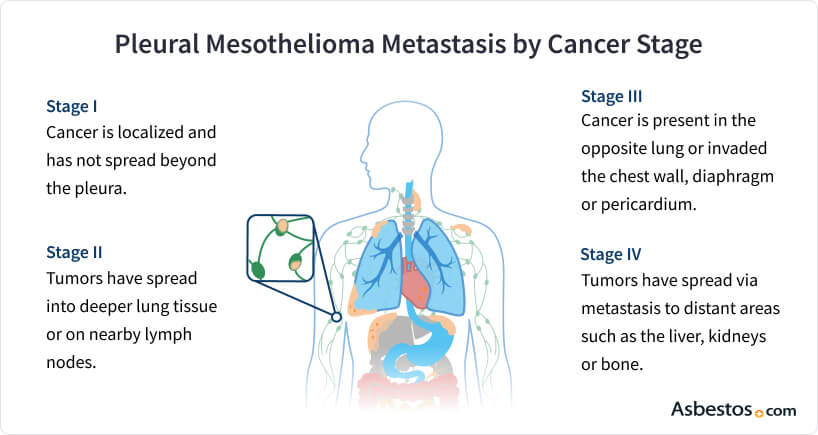
Metastatic mesothelioma is another name for stage 4 mesothelioma, which means your cancer has moved beyond its original site. While mesothelioma typically begins in the lining around your body’s organs called the mesothelium, it can spread to nearby tissues and distant organs.
As Dr. Jacques Fontaine, a thoracic surgeon at Moffitt Cancer Center, tells us, “Lymph nodes are the normal filters of the blood. They are like the toll gate before you get on a highway. Once cancer cells are in the bloodstream, they can go to other organs and start growing there.”
How Does Mesothelioma Spread?
Mesothelioma spreads through the bloodstream and through the lymphatic system. In earlier stages, mesothelioma tends to spread locally, staying close to where it originally formed. As the disease advances, the bloodstream and lymph nodes carry cancer cells to distant organs where they can form new tumors.
Tumors can trigger the growth of new blood vessels, a process called angiogenesis. This process not only feeds the tumor but gives cancer cells a direct route into the bloodstream to spread further.
The lymphatic system filters fluid through lymph nodes throughout the body. Cancer cells can travel through lymph nodes, using them as pathways to reach new parts of the body.
When Does Mesothelioma Metastasize?
Mesothelioma spreads mostly in the late stages of the disease. Doctors diagnose people with metastatic mesothelioma when their cancer spreads further in the area where it started and to more distant parts of the body. This is the case during stage 4 mesothelioma.
Mesothelioma diagnosed in early stages exists only on its primary site and doesn’t metastasize. Primary sites where mesothelioma develops are specific areas of the mesothelium. These include the pleura (lining of the lungs), peritoneum (lining of the belly), pericardium (lining around the heart) or tunica vaginalis (lining of the testicles).
In later stages, cancerous cells detach from where they originally developed. Some people may experience more aggressive spreading than others, with cells spreading quickly over time. Other people may enter the later stages of mesothelioma with a more gradual spread, depending on their specific diagnosis.
Where Does Mesothelioma Metastasize?
Metastatic mesothelioma may spread to the liver, lungs, kidneys, adrenal glands or spleen. When mesothelioma spreads, it infiltrates organs and creates secondary tumors.
Mesothelioma metastasis is more common within the body cavity in which it originally formed. Doctors refer to this as local spread.
Imaging scans are used to see if mesothelioma tumors are growing in different areas beyond their initial site. These include CT scans, PET scans and MRIs.
Mesothelioma Metastasis by Type
Mesothelioma Type
Common Spread Locations
Notes on Frequency
Pleural
Adrenal glands, bone, intestines, kidneys, liver, other lung, peritoneum
Roughly 67% of pleural patients had distant metastatic tumors at diagnosis
Peritoneal
Abdominal lymph nodes, liver, peritoneal lining
Distant metastases occur in about 50% of people with peritoneal mesothelioma
Pericardial
Kidneys, lungs, regional lymph nodes
Metastasizes in about 25% to 45% of cases
Testicular
Liver, lungs, omentum, vertebrae
Rare; typically spreads to lower body lymph nodes first
Metastatic Pleural Mesothelioma
Metastasis in pleural mesothelioma spreads to the bone, intestines, kidneys, liver and other structures. A 2024 German study in the journal Cancers revealed that 13.3% of those with a pleural diagnosis also had distant metastasis (not inclusive of the brain) at the time of diagnosis.
A recent retrospective study found that of 164 pleural patients, roughly 67% had distant metastatic tumors at diagnosis. The most common sites were the other lung, the peritoneum and bone. Previous studies found the most common metastasis sites are the liver, adrenal glands and kidneys. The tongue and scalp are less common.
Common Sites of Pleural Mesothelioma Metastasis
Adrenal glands
Bone
Intestines
Kidneys
Liver
Other lung
Peritoneum (lining of the abdomen)
Mesothelioma metastasizing to the brain or central nervous system is rarer. Studies conducted in 2022 and 2024 found that only about 5% of people with pleural mesothelioma experienced metastasis to the brain.
A May 2025 Perelman School of Medicine study found pleural mesothelioma patients receiving only immunotherapy were 4% more likely to experience brain metastasis than those receiving only chemo. Immunotherapy activates the immune system, revealing hidden brain metastases through inflammation that makes tumors easier to detect. Researchers recommend brain imaging before immunotherapy to find any hidden spread early and guide treatment. The study doesn’t discuss metastasis for those receiving both immunotherapy and chemo.
Metastatic Peritoneal Mesothelioma
The most frequent sites for metastasis of peritoneal mesothelioma are the liver, peritoneal lining and abdominal lymph nodes. Less common sites include the lungs, heart, brain, bone and kidneys.
Common Sites of Peritoneal Mesothelioma Metastasis
Liver
Peritoneal lymph nodes
Peritoneum (lining of the abdomen)
Peritoneal mesothelioma doesn’t metastasize outside the abdominal cavity during early onset. Your abdominal cavity consists of your stomach, spleen, intestines, liver and other organs in your belly. Distant metastases occur in about 50% of people with peritoneal mesothelioma.
500+ SPECIALISTS AVAILABLE
Get to the Right Mesothelioma Cancer Center, Faster
Connect with top-rated mesothelioma specialists at a cancer center near you, who will personalize treatment options based on your diagnosis.
Metastatic Pericardial and Testicular Mesothelioma
The local spread of pericardial mesothelioma usually involves the pleura, lung and the rest of the chest cavity. Pericardial mesothelioma metastasizes in about 25% to 45% of cases. Frequent sites are the regional lymph nodes, lungs and kidneys.
Common Sites of Pericardial and Testicular Mesothelioma Metastasis
Kidneys
Liver
Lungs
Omentum (fatty tissues around the abdominal organs)
Regional lymph nodes
Vertebrae, chest (thorax) and lumbar
As testicular mesothelioma progresses, it tends to spread from the lining of the testes to the lymph nodes in the lower body. Metastasis in this type of mesothelioma is rare. When it occurs, it can spread to the vertebrae of the spine, the omentum, the liver and the lungs.
What Causes Mesothelioma Metastasis?
The main cause of mesothelioma metastasis is cancer cells entering the bloodstream or lymphatic system. Factors such as cancer stage, tumor cell type and response to treatment influence the risk of metastasis. People have a lower risk if they have an early-stage diagnosis with a favorable cell type that responds well to treatment.
Factors Influencing Mesothelioma Spread
Cancer stage: The risk of metastasis is low in early-stage mesothelioma (stages 1 and 2) and high in advanced stages (stages 3 and 4).
Response to treatment: Chemo, radiation, anti-angiogenesis drugs, Tumor Treating Fields and tumor-removing or cytoreductive surgery can all reduce the risk of metastasis.
Tumor cell type: Epithelioid mesothelioma spreads more slowly than the more aggressive sarcomatoid or biphasic types.
One additional way cancer spreads through the bloodstream is angiogenesis. This happens when existing blood vessels grow new capillaries, usually supporting healthy growth and healing. However, this process can also help cancer tumors grow and spread, as the new blood vessels allow cancer cells to travel through the bloodstream.
Metastatic mesothelioma can cause belly pain, blood pressure changes and memory problems. If it spreads to the adrenal glands, it can cause weight loss and weak muscles. Doctors often don’t find these signs until they do scans or tests.
Cancer can spread and cause different mesothelioma symptoms depending on where it goes. In the lungs, it can make it hard to breathe and cause chest pain. In the brain, it can cause nerve problems. Sometimes, the symptoms affect the whole body.
Common Symptoms of Mesothelioma Metastasis
Difficulty breathing
Fatigue
Fever
Neurological symptoms (changes in vision, seizures, etc.)
Pain
Weakness
Weight loss
If you’re experiencing mesothelioma symptoms that aren’t typical, this could be a sign the cancer has advanced. It’s important to speak to your doctor right away if you feel any new or worsening symptoms.
Pleural mesothelioma survivor Barbara Lapalla tells us after months of chemo, CT scans showed her cancer had spread. She shares, “I figured maybe my time had come.” But she began immunotherapy with Keytruda, and it worked very well for her. She tells us, “I just feel like I’ve been blessed with what I’ve been given, and that’s extra time.”
Barbara Lapalla’s chemotherapy side effects were debilitating. Her CT scan results showed it didn’t stop or slow her pleural mesothelioma from metastasizing too far for surgery. She attributes her miraculous turnaround to Keytruda (pembrolizumab). “Keytruda has worked like a charm for me, although I’m not exactly sure why,” Barbara said. “For me, it’s the magic bullet.”
Barbara Lapalla
Verified Asbestos.com Survivor
Treating Metastatic Mesothelioma
Using a combination of therapies is often the most effective approach to treating metastatic mesothelioma. A mesothelioma specialist can recommend the best course of treatment after metastasis.
In combination with chemo, Tumor Treating Fields can delay or prevent mesothelioma from spreading. Immunotherapy may reduce the rate of metastasis when received before surgery.
Treatment Options
Chemotherapy: Destroys cancer cells throughout the body in systemic therapy or can be delivered locally to delay metastasis
Immunotherapy: Targets proteins crucial for cancer cell growth and spread
Radiation: Shrinks tumors and prevents local spread of mesothelioma
Tumor Treating Fields: Noninvasively reduces cancer spread, stimulates the body’s immune response and may increase the benefits of chemo
Because cancer can use angiogenesis to spread, scientists are testing medicines that stop this process. Some of these medicines for mesothelioma include semaxanib, an anti-angiogenic drug, and tetrathiomolybdate, which blocks copper. In studies, these medicines have kept mesothelioma from getting worse.
Once cancer has spread to distant parts of the body, mesothelioma treatment options tend to center around palliative care. These therapies relieve symptoms and provide comfort rather than attempt to cure the disease.
Common Questions About Mesothelioma Metastasis
Where does mesothelioma spread first?
Mesothelioma most commonly spreads locally where it first forms before reaching distant organs. For pleural mesothelioma, the most common initial spread sites are the lymph nodes and the opposite lung. For peritoneal mesothelioma, initial spread usually involves the liver and abdominal lymph nodes. The pattern of spread depends on where the cancer started and how advanced it is.
Can metastasis be prevented in mesothelioma patients?
Mesothelioma treatments can reduce, if not always prevent, local spread of disease and the risk of distant metastases. Options include chemotherapy, radiation, immunotherapy and Tumor Treating Fields.
Can metastatic mesothelioma be treated?
Yes, doctors have treatment options available for people with metastatic mesothelioma. Chemo, immunotherapy, radiation and Tumor Treating Fields can all play a role in managing the disease. At stage 4, treatment goals typically shift toward controlling the disease, relieving symptoms and improving quality of life rather than curative treatment. A mesothelioma specialist can recommend the best course of treatment based on your health and treatment goals.
What is the prognosis for patients with metastatic mesothelioma?
Metastatic stage 4 mesothelioma has an average life expectancy of 14.9 months. However, individual prognoses vary based on mesothelioma location, cell type, age and overall health. Your response to treatment will affect your personal prognosis.
Are there support groups or resources for patients with metastatic mesothelioma?
Yes, the Mesothelioma Center at Asbestos.com has support groups for people with mesothelioma and their loved ones. These include the Mesothelioma Support Group and the Mesothelioma Survivor, Caregiver & Family Support Facebook group. The Mesothelioma Support Group has a licensed mental health counselor and a registered nurse leading it, and it’s available online or phone monthly. Our Patient Advocates also offer free support 7 days a week.
Recommended Reading
Your web browser is no longer supported by Microsoft. Update your browser for more security, speed and compatibility.
If you are looking for mesothelioma support, please contact our Patient Advocates at (855) 404-4592
Fact Checked
Our fact-checking process begins with a thorough review of all sources to ensure they are high quality. Then we cross-check the facts with original medical or scientific reports published by those sources, or we validate the facts with reputable news organizations, medical and scientific experts and other health experts. Each page includes all sources for full transparency.
Reviewed
Asbestos.com is the nation’s most trusted mesothelioma resource
The Mesothelioma Center at Asbestos.com has provided patients and their loved ones the most updated and reliable information on mesothelioma and asbestos exposure since 2006.
Our team of Patient Advocates includes a medical doctor, a registered nurse, health services administrators, veterans, VA-accredited Claims Agents, an oncology patient navigator and hospice care expert. Their combined expertise means we help any mesothelioma patient or loved one through every step of their cancer journey.
More than 30 contributors, including mesothelioma doctors, survivors, health care professionals and other experts, have peer-reviewed our website and written unique research-driven articles to ensure you get the highest-quality medical and health information.
About The Mesothelioma Center at Asbestos.com
Assisting mesothelioma patients and their loved ones since 2006.
Helps more than 50% of mesothelioma patients diagnosed annually in the U.S.
A+ rating from the Better Business Bureau.
5-star reviewed mesothelioma and support organization.
My family has only the highest compliment for the assistance and support that we received from The Mesothelioma Center. This is a staff of compassionate and knowledgeable individuals who respect what your family is experiencing and who go the extra mile to make an unfortunate diagnosis less stressful. Information and assistance were provided by The Mesothelioma Center at no cost to our family.
Asbestos.com. "Mesothelioma Metastasis." Last modified April 16, 2026. https://www.asbestos.com/mesothelioma/metastasis/.
The Patient Advocates are absolutely amazing and helpful! I am so very pleased with the information and the emotional support that I have received from everyone! When I felt all hope was lost, Amy gave me great information and was so compassionate. I do not feel alone, and I know there is strong support for anyone dealing with this tragic disease. I received a FREE information package, including a recipe book, information on the disease, a toll-free number to contact for assistance, and a book with the answers to 100 questions that are commonly asked. This information alone was worth my time! I read for hours and hours, and just that alone—knowledge—can be a great comfort. To fully understand this disease, to just have the knowledge!!! Thank you all!! Thank you so, so much.
I found out about The Mesothelioma Center while researching peritoneal mesothelioma days after being diagnosed with the malignant cancer. While a lot of the 'Mesothelioma' websites are actually law firms just trying to get your business, theirs is a user-friendly, comprehensive website set up to aid patients, their loved ones, and/or caregivers with all things related to a cancer diagnosis from asbestos exposure. I was soon put in touch with one of their doctors, Snehal Smart, M.D., who immediately sent me a packet of general information, a book on surviving mesothelioma, and offered me assistance in finding doctors, reputable law firms, financial help, support groups, and so much more! The Mesothelioma Center's website is, in my opinion, the best resource for anyone suffering from cancer due to asbestos. Dr. Smart is amazing! She is very knowledgeable and helpful, but she is also a very kind, caring doctor who goes the distance whether she is researching a pertinent topic, making suggestions, providing contacts, or just being a good listener on the other end of the phone. In addition, Dr. Smart referred me to a law firm who is now fighting to get me compensation for the negligence of those defendants whose products exposed me to asbestos and caused my subsequent cancer. Thank you, TMC and Dr. Smart, for helping me determine the best treatment plan for my cancer and being part of my miracle. I am currently cancer-free and back to being a mom to my precious daughter. The Mesothelioma Center, their website, and their staff rock!!
I reached out and talked to Aaron a couple of weeks before my diagnosis of malignant mesothelioma. He was very helpful and gave me a lot of information at that time. I have talked to him several times since and always gotten my questions answered. Aaron is very knowledgeable and has been very helpful and supportive. He also sent me a comprehensive packet of information, including info on nutrition, legal help, and medical resources.
My brother was recently diagnosed with mesothelioma. I began researching it online. The information I received from The Mesothelioma Center is all-inclusive. No need to look anywhere else! The first phone call was with Karen, and she answered all my questions with ease. She also had a calming effect by presenting all the options available for my brother and his family. Thank you!
My Dad was diagnosed with mesothelioma, and thankfully The Mesothelioma Center was the first place I called. Snehal Smart answered the phone immediately and was very helpful. She immediately sent us an information packet and answered questions. She followed up each week to see how things were going and if we had any questions. She also connected us with a lawyer. I highly recommend this Center.
Registered Nurse and Board Certified Patient Advocate
Karen Selby is a registered nurse and Board Certified Patient Advocate at The Mesothelioma Center with more than 30 years of experience in oncology and thoracic surgery. She worked as an operating room nurse in thoracic surgery at the University of Maryland for 6 years, assisting with surgeries such as lung transplants, pneumonectomies and pleurectomies. She later served as regional director of the tissue procurement program at the University of Florida. Karen joined The Mesothelioma Center in 2009, providing patients with personalized support and resources.
Fact-checked and verified content:
Our fact-checking process begins with a thorough review of all sources to ensure they are high quality. Then we cross-check the facts with original medical or scientific reports published by those sources, or we validate the facts with reputable news organizations, medical and scientific experts and other health experts. Each page includes all sources for full transparency.
Please read our editorial guidelines to learn more about our content creation and review process.